Generic Trap Processor
About
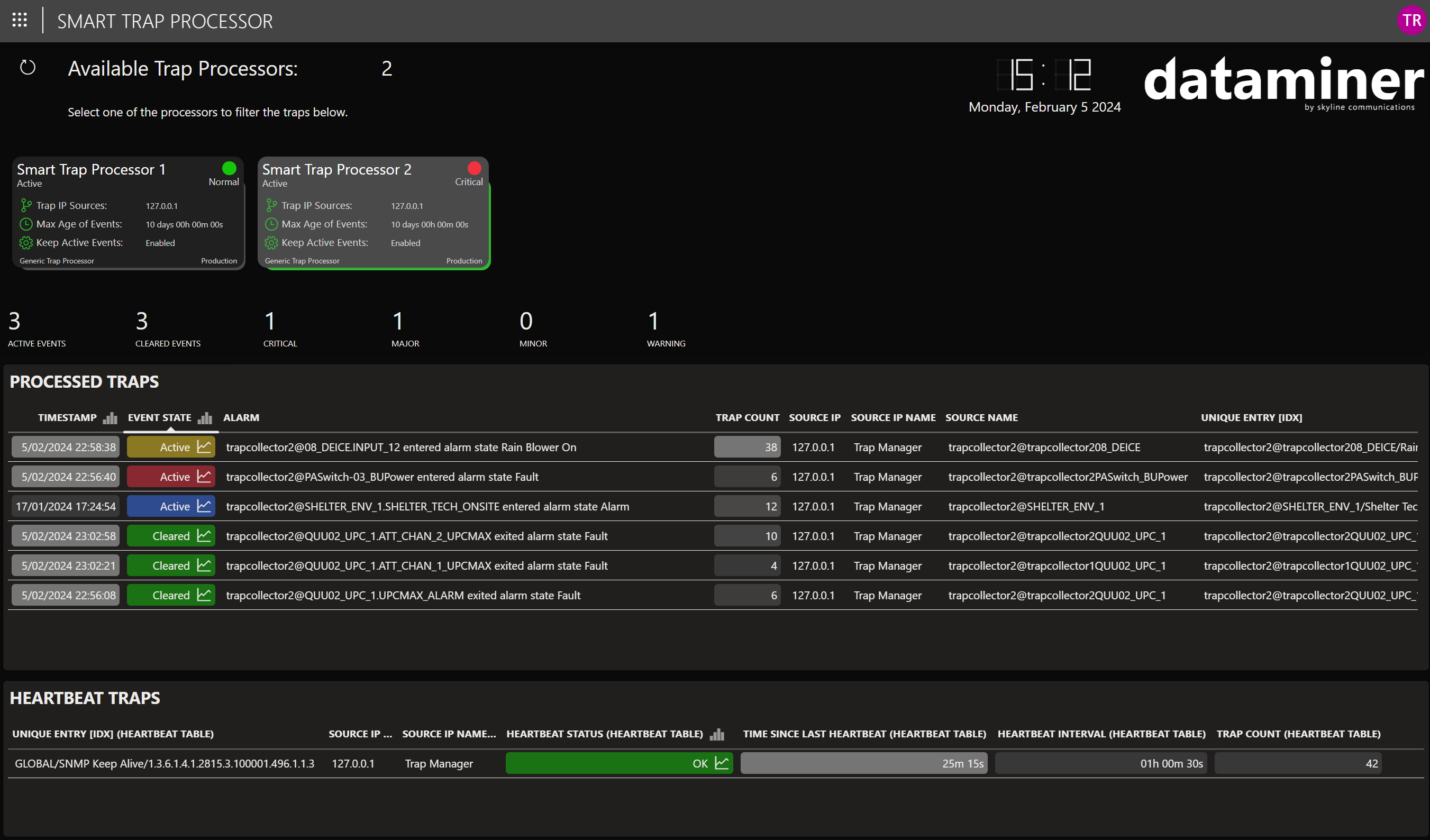
The Generic Trap Processor is a powerful tool that allows you to define rules for collecting and processing SNMP traps from various sources. With this tool, you can specify which traps to capture, filter, transform, and display via a user-friendly connector. The Generic Trap Processor simplifies the monitoring of the most important system events and ensures appropriate alarm levels are assigned. By enabling the team to control message volume, this tool also helps to prevent alert fatigue.
Tip
For an enhanced experience, explore the complete package, which includes this connector and the low-code app: Smart Trap Processor Package.
Key Features
- Flexible processing rules: Customizable rules that can be tailored to suit any system or device sending SNMP traps.
- Intelligent analytics: Integration of intelligence and analytics into datasets that typically lack enhanced monitoring capabilities.
- Automated alarm generation and clearance: Automatically generating and clearing DataMiner alarms for incoming traps based on Set and Clear OIDs.
- Centralized monitoring and configuration: Configuring processing logic and monitoring all processed traps for an entire DataMiner System via a single, user-friendly connector.
Use Cases
The Smart Trap Processor tool is invaluable for monitoring infrastructure, benefiting NOC personnel, IT professionals, network administrators, and system engineers.
Common use cases include:
- Alerting network administrators to critical events like link failures, power outages, and authentication issues by processing traps from routers and switches.
- Notifying users about system-related events such as software crashes, hardware failures, and high resource consumption by processing traps from servers and workstations.
- Notifying on-site personnel of HVAC failures, weather-related events, and other environmental issues by processing traps from environmental sensors.
- Filtering out informational or non-critical traps from sources prone to generating excessive noise.
- Filtering different types of traps from a single source into their own processor, when using a central trap manager to aggregate traps for an entire system. The distinction could be based on factors like location or device type.
Technical info
Note
For detailed technical information, refer to the Technical help page.